Are you booking an Antarctica cruise—or planning the experience of a lifetime? Antarctica is unlike any other destination, and the decisions you make before you book can dramatically shape your journey. From choosing the right expedition ship and travel season to understanding landing regulations, wildlife opportunities, and optional adventures, this guide explains how thoughtful planning leads to a richer, more immersive experience on the White Continent. Rather than focusing solely on price or luxury, travelers should prioritize the choices that maximize time on shore, meaningful wildlife encounters, and expert-led exploration. Whether your dream is photographing pristine icebergs, witnessing thousands of penguins during nesting season, kayaking alongside glaciers, or watching whales surface beside your Zodiac, timing and ship selection matter.
Small expedition vessels, experienced guides, and early planning all contribute to creating a once-in-a-lifetime adventure that goes far beyond a traditional cruise. Antarctica rewards travelers who prepare well. By working with experienced advisors, planning 8–12 months ahead, and selecting an itinerary aligned with your interests, you’ll spend less time worrying about logistics and more time experiencing one of the most extraordinary places on Earth. The goal isn’t simply to visit Antarctica—it’s to experience it in a way that stays with you long after you’ve returned home.
Antarctica has a way of surprising even the most seasoned travelers.
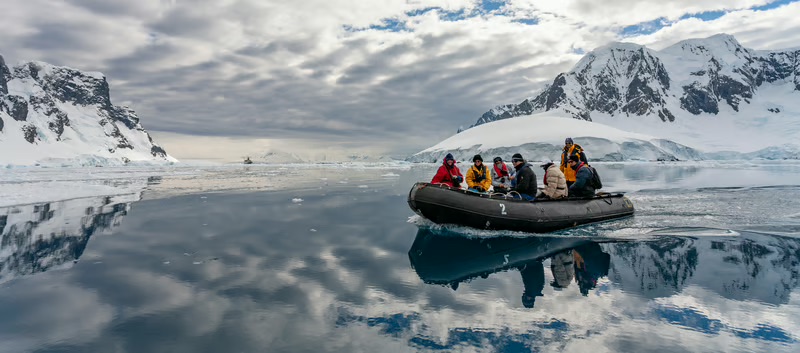
It’s one of the world’s greatest examples of experiential travel. Here, the memories you’ll take home aren’t defined by your cabin category, but by your experiences. Setting foot on the continent. Watching a pod of whales surface beside your Zodiac. Listening to expert naturalists. Standing in complete silence surrounded by ice. And these moments are shaped by the choices you make long before your expedition begins.
Ship size determines how much time you’ll actually spend on land. Seasonality influences everything from wildlife sightings to lighting. Routing choices affect not only what you see, but how you experience the continent.
Having planned countless Antarctica tours for travelers, and having explored it myself, I can say this with confidence: Antarctica isn’t just another cruise.
“I still remember my first sight of the continent. I expected incredible wildlife, towering icebergs, and dramatic landscapes. What I didn’t expect was how deeply the experience would stay with me after I returned home.”
In that moment, I understood why Antarctica is unlike anywhere else on earth.
And while there’s no wrong way to visit Antarctica, there are choices that can reduce the quality of your experience. That’s where working with a skilled travel advisor can make all the difference. My job is to help people cut through the complexities of Antarctic travel and refocus on the decisions that will actually shape their journey.
The smartest Antarctica cruise isn’t the cheapest or the most luxurious. It’s the one built around a clear understanding of the experience you’re actually hoping to have.
Antarctica Is Expensive. Does Booking It Wrong Cost More?
Antarctica is expensive, so it’s natural to focus on price. But unlike a traditional cruise, the wrong booking decision doesn’t just affect what you pay. It can dramatically change what you experience.
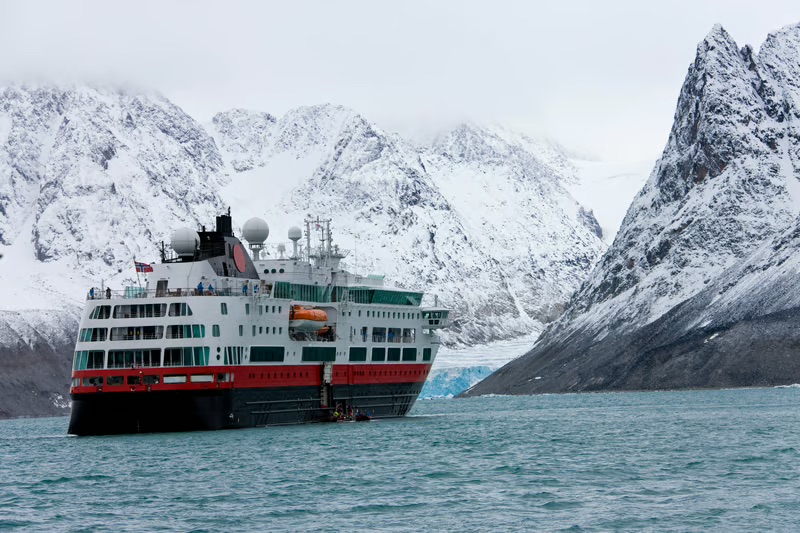
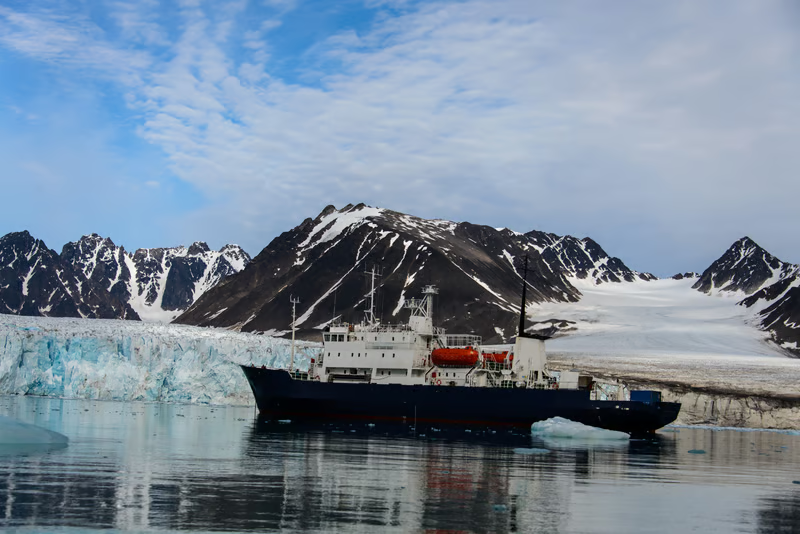
Antarctica cruise works differently. On most cruises, travelers compare cabins, dining, entertainment, and onboard amenities. In Antarctica, those become secondary. What shapes your experience is how much time you spend on shore, how often you land, and how easily your ship can adapt to weather and wildlife conditions. That’s why smaller expedition vessels often deliver a far richer experience than larger traditional cruise ships, even when they offer fewer onboard luxuries.
I always remind people that when traveling to the seventh continent, the best question to ask isn’t, “What’s the cheapest way to visit?” or, “How can I make this the most comfortable trip possible?” It’s, “What choices will create a truly life-changing experience?”
Many people come to Travelopod not knowing what Antarctic expedition is right for them. For the sights they want to see, and the experiences they want to have. Our expert travel advisors help you cut through the noise to make the right choices the first time, ensuring you maximize your budget, your time on the ice, and your once-in-a-lifetime opportunities.
The Reality of Antarctic Access: When booking, remember that you aren’t paying for onboard amenities or traditional entertainment; you are paying for raw access to a pristine, heavily regulated landscape. Opting for a cheaper ticket on a massive, 600-passenger ship often means sacrificing that access, leaving you to look at the continent through binoculars from the deck. Real value lies in small expedition vessels that get you off the ship and onto the ice, transforming your journey from mere sightseeing into a truly life-changing experience.
Why Does Antarctica Require a Different Booking Strategy?
Antarctica doesn’t operate like a traditional luxury travel destination.
I’ve heard from travelers who visited Italy and spent their days relaxing into long lunchtime conversations and discovering hidden wineries. I’ve seen people visit Morocco, get lost in the souks, and stumble upon sensory delights as they wind their way out. In Japan, I’ve booked classes and wandered streets based solely on what interested me. I’ve noticed people traveling to Paris and adding another museum, another hotel night to their itinerary on a whim.
There’s room to improvise. To make plans based on availability, your mood, and the weather.
“Antarctica cruise works differently. “
There are no hotels, ports, or independent onshore activities. Spontaneity comes from weather, ice movement, and wildlife activity, not from a surplus of options. Travel becomes something simple and pure, defined by an ancient presence and nature on a nearly indescribable scale. I’ve seen many visitors return talking not just about what they did, but also about how their firsthand encounters with one of the most remote destinations on earth have given them a new sense of humility, environmental responsibility, and wonder at the world around them.
Because of this lack of traditional infrastructure, early planning isn’t just a recommendation; it is a logistical necessity. The global demand for these rare experiences is climbing rapidly. According to recent data from ResearchAndMarkets, the polar tourism market is projected to reach nearly $2.5 billion by 2030, up from $1.7 billion in 2025.
As popularity surges, the strict operational limits of the continent become even more critical to navigate:
- A Compressed Window: The safe entry season lasts only five months (November to March).
- Strict Capacity Caps: To protect the ecosystem and ensure maximum time on the ice, the most immersive expedition ships limit their capacity to 100–150 guests.
- Fixed Routing: Deep-polar voyages to remote areas like South Georgia or the Falkland Islands require long lead times and highly specialized vessels.
Waiting until the last minute may not lock you out of the season entirely, but it forces you into heavy compromises. You are often left choosing between less-than-ideal cabin configurations, dates that don’t match your wildlife goals, or massive ships that restrict your land access.
By mapping out your journey 8 to 12 months in advance with an expert, you don’t just secure better positioning; you safeguard the exact transformative experience you are looking for.
Timing the Ice: When Should You Go?
One common misstep is assuming the White Continent remains unchanged during its brief five-month tourism window (November to March). In reality, the environment undergoes dramatic shifts. Choosing your window determines exactly what kind of journey you will experience:
The Seasonal Reality: When Should You Book?
| Season & Vibe | Landscape & Climate | Wildlife Highlights | Travel Advantages |
| Early Season (Nov – Early Dec) 🎨 Best for Photographers | • Pristine, fresh snow blankets the entire shoreline. • Architectural, newly sculpted icebergs. • Low, golden polar light that is perfect for photos. | • Penguins arrive to claim nesting sites. • Colonies are pristine and untouched before the mid-season rush. | • Often offers lower pricing. • Ships are less crowded. • The thrill of breaking the long winter silence. |
| Mid-Season (Mid-Dec – Early Feb) 🐧 The Classic Polar Dream | • Peak temperatures (near 50°F). • Nearly 24 hours of continuous daylight. • Receding sea ice opens routes south past the Antarctic Circle. | • Penguin colonies are loud, busy, and full of newly hatched chicks. • Abundant seals lounging on the shorelines. | • Maximum route accessibility. • Energetic, active atmosphere ideal for families and holiday travelers. |
| Late Season (Mid-Feb – March) 🐋 Best for Whale Watching | • Sea ice is completely clear. • Days begin to shorten, bringing back dramatic sunsets. • Soft, quiet evening light as the continent slows down. | • Peak whale activity: Massive pods of Humpbacks, Orcas, and Minkes surface near Zodiacs. • Older penguin chicks start swimming on their own. | • Tourist crowds thin out significantly. • A peaceful, deeply moving, and meditative atmosphere. |
Why Is Ship Size So Important?
Of all the decisions involved in planning an Antarctica cruise, this is the one I discuss most often with travelers.
It’s also the decision I appreciated most once I was there.
IAATO regulations allow only 100 passengers on shore at any one time. That single rule has a huge impact on your experience. On ships carrying 200 or 300 passengers, guests must rotate in groups, which means less time exploring Antarctica. Ships carrying more than 500 passengers aren’t permitted to make landings at all.
“When I led my first small group to Antarctica, I deliberately chose a small expedition ship. It completely changed how we experienced the continent. Instead of waiting for our turn, we were often able to go ashore multiple times a day and adapt quickly when wildlife appeared or weather conditions changed.”
One couple in our group had originally booked a larger luxury ship with around 250 passengers. After learning how the landing rules worked, they switched to a smaller expedition vessel. When they returned, they told me those extra landings had become the highlight of their entire trip.
That’s why I usually recommend expedition ships carrying about 100 to 150 passengers. They’re small enough to maximize your time on shore while still offering excellent expedition teams of naturalists, scientists, and guides who enrich every landing with their knowledge and experience.
And when on an adventure in Antarctica, that’s exactly what you want.
Optional Experiences: What’s Worth the Upgrade?
I understand the temptation.
When planning an Antarctica cruise, it’s easy to think you should take every opportunity to book an optional experience. After all, for many people, it’s a once-in-a-lifetime journey.
But more isn’t always better.
Optional activities require time, preparation, and flexibility, and some may mean missing other expedition experiences. That’s why I always advise people to choose add-on activities based on the meaning and enjoyment they offer, rather than feeling the need to do everything.
The most memorable moments on an Antarctica cruise often aren’t the ones you paid extra for. They are the unexpected whale encounters, the silence of a snowy landing, or the watching of thousands of penguins going about their day. They’re the quiet moments that reveal something unique and special about the continent.
For people for whom optional experiences are a worthwhile addition, there are three I often recommend:
- Sea kayaking (best overall upgrade)
- You feel immersed within the landscape instead of looking out at it
- Often quieter and more intimate than traditional excursions
- Ideal for travelers who enjoy active exploration
- Choose between day paddles (short and slow) and sea kayaking (involved and time-intensive)
- Most travelers describe kayaking as the most memorable part of their trip, even calling it a “spiritual” experience because of the silence and close encounters with glaciers and whales.
- Camping (best value and unforgettable story)
- Fall asleep surrounded by the Antarctic landscape
- No tents; just a sleeping bag beneath the open sky (ideal for stargazing)
- Campers use thick, insulated gear for warmth
- Polar plunges (free and iconic)
- Brief, cold, and completely unforgettable
- A tried-and-true tradition on many expeditions
- Creates instant camaraderie among passengers
- More about the story than the swim
- Snowshoeing (if conditions are right)
- A deeper look into the White Continent
- Often described as a meditative experience
- Led by expert mountain guides
- Specialized activities
- Ex: Diving or mountaineering
- Only if they align with your skills and interests
The foundational experiences, from landings and Zodiac cruises to lectures and group tours, aren’t just filler. They’re the core of your Antarctic journey, giving you access to everything that makes the continent such a uniquely magnificent, moving destination. But if optional add-ons match your preferences, they can add another layer of breathtaking adventure to complement the perspective-altering scale and sense of privilege Antarctica offers.
Why Does Guidance Matter When Traveling to Antarctica?
One of the biggest problems with planning an Antarctica cruise isn’t the lack of information. It’s the excess of it.
When our advisors sit down with clients to map out departures, we bypass the noise and focus on four strategic pillars:
- Route Selection
- The Drake Passage: Choose the classic sea route if you want the full explorer “rite of passage” experience across the legendary open ocean.
- Fly-Cruise Packages: Opt to fly over the Drake Passage if you face strict time constraints or suffer from severe seasickness.
- Cabin Strategy
- Skip the Luxury Suites: Avoid overpaying for massive rooms; you will rarely spend time inside your cabin when there is constant action outside.
- Prioritize Stability: Choose a lower-deck, midship cabin location to experience the least amount of movement and the most physical stability if the seas get rough.
- The Expedition Team
- Prioritize Experts Over Amenities: Look past the thread count of the sheets and focus heavily on the ratio of experts to passengers.
- Seek a Research Vibe: Look for ships that function as floating research communities, staffed with credentialed naturalists and scientists who actively enrich your daily excursions.
- Booking Window
- Plan 8 to 12 Months Out: Secure your spot early, as small-capacity expedition vessels are highly coveted and prime dates sell out fast.
- The Risk of Waiting: Avoid hunting for last-minute deals, which almost always force heavy compromises on ship size, routing, or wildlife-watching windows.
Conclusion: Crafting Your Seventh Continent Story
Yes, it does. And that’s exactly the point.
There is no single “best” Antarctica cruise because the ideal experience is entirely subjective. For one traveler, it’s an early-season photography trek, for another, such as the travelers increasingly drawn to journeys that educate them, it’s a trip to South Georgia or through the Antarctic Circle, one that drives personal growth and offers once-in-a-lifetime moments.
For me, Antarctica remains one of the journeys I think about most often, not just because of the penguins, whales, or icebergs, but because of the perspective it gave me.
In a world where travel is often about checking destinations off a list, Antarctica is one of the few places that can genuinely change how you see the world.
The key to experiencing these life-altering moments is understanding your options before you book. And that’s what we help travelers do every day at Travelopod.
If Antarctica is quietly calling to you for the 2026–2028 seasons, the journey begins with a conversation. The features that make a polar voyage truly unforgettable are best secured early.
With expert guidance and tailored planning, your trip to the bottom of the world will become the journey of a lifetime. When you’re ready to start exploring dates, vessels, and routes, feel free to reach out to us at Travelopod, and we’d love to help you design your perfect expedition.
Frequently Asked Questions (FAQs) About Antarctic Expeditions
Before you book, it’s completely normal to have questions about the daily realities of traveling to the bottom of the world. Here are the practical facts most future explorers ask us about:
1. Is the Drake Passage really that rough?
It can be. Some crossings are calm, while others are famously rough. Modern expedition ships are built to handle these conditions, and medications or patches help most travelers manage seasickness. If you’re particularly concerned, a fly-cruise itinerary lets you skip the Drake Passage altogether.
2. Can seniors visit Antarctica?
Absolutely. Many Antarctica travelers are in their 60s and 70s. You don’t need to be an athlete, but you should be comfortable getting in and out of Zodiacs and walking on uneven, sometimes snowy terrain.
3. Is Antarctica safe?
Yes. Antarctica is one of the safest expedition destinations when you travel with an experienced IAATO operator. Strict environmental regulations, highly trained expedition teams, and comprehensive safety protocols are designed to protect both travelers and the fragile environment.
4. Do I need hiking experience?
No. Most landings involve short walks at your own pace, and participation is optional. Some activities, such as mountaineering or longer hikes, require additional fitness and experience, but the standard expedition is suitable for most travelers.
5. How cold is it really?
During the expedition season (November through March), temperatures typically range from about 20°F to 45°F (-6°C to 7°C). With proper layering and waterproof outerwear, most travelers find Antarctica much more comfortable than they expected. Wind often has a bigger impact than the temperature itself.