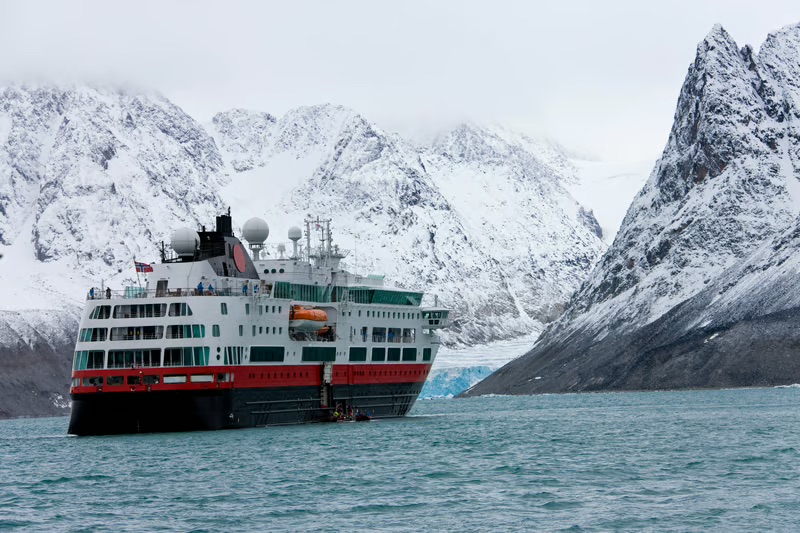
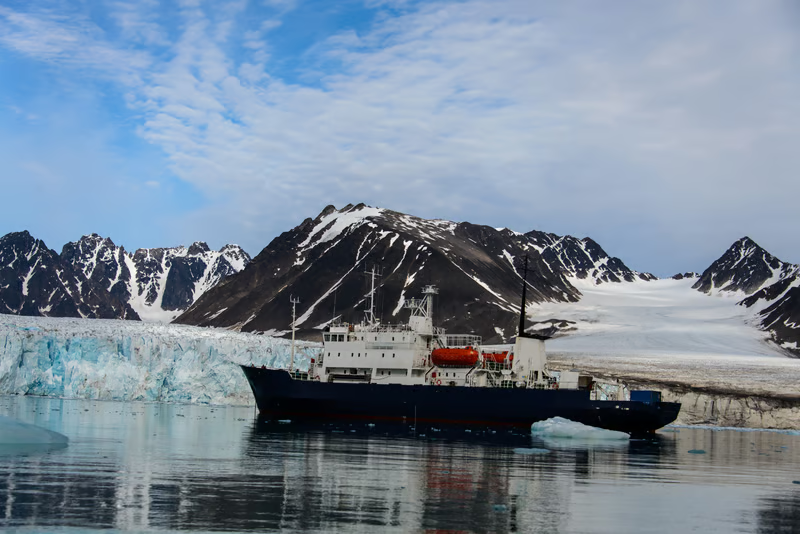
How do you choose the right Antarctica expedition when there are so many ships, routes, seasons, and activities to compare? Planning an Antarctica cruise should start with the experience you want—not simply the cabin, cruise line, or lowest fare. Timing, vessel size, itinerary, expedition capability, and opportunities to get off the ship can significantly shape the journey.
Travelers should consider when they want to visit, which route best matches their priorities, how ship size affects landings, and which activities actually add value to their experience. Smaller ships can offer different landing opportunities, while routes such as the Antarctic Peninsula, Antarctic Circle, South Georgia, and the Falklands provide distinct combinations of wildlife, scenery, time at sea, and exploration. Ultimately, the best Antarctica cruise isn’t automatically the cheapest or most luxurious—it is the expedition whose complete experience most closely matches what you want to remember about the journey.
Antarctica is not an everyday cruise.
“The season, route, ship, and operating model can influence how often you leave the vessel, what wildlife and conditions you may encounter, and how the journey feels.”
My own expedition changed how I evaluate Antarctica for travelers. From boarding Zodiacs and making wet landings to choosing among different levels of exploration, the ship became secondary to everything happening beyond it the moment we reached Antarctica. It taught me that planning Antarctica cruises isn’t just about choosing a cabin; it’s about creating the structure that will determine how you experience the continent.
Many of those meaningful moments were shaped long before I boarded, through decisions about timing, vessel size, itinerary, and expedition capability.
When it comes to planning luxury experiential travel like a journey to Antarctica, finding this information isn’t the hardest part of the trip. Search engines make research easy and information plentiful. The real challenge is knowing how to best interpret your research to answer one vital question: “What kind of Antarctica expedition are you hoping to have?”
By understanding the differences between vessels, operators, routes, seasons, and overall value, and aligning these elements with your preferences, you can create a meaningful journey that will live on in your stories for years to come.
What Do Antarctica Itinerary Choices Look Like at a Glance?
| Decision | Key Options | Questions to Ask |
| Timing | – The duration of the tourist season (November through March)
| – Which wildlife, landscapes, and conditions matter most to me? |
| Route | – Three common expedition itinerary types
| – How much time am I willing to spend at sea? |
| Ship size | – Differences in scale, luxury, and opportunities
| – Do I value time ashore or onboard amenities more? |
| Activities | – Paid and optional experiences, including:
| – How active and immersive do I want the trip to be? |
| Value | – Bundled or unbundled fare | – What’s included beyond the base cruise elements? |
When Should You Travel?
Most Antarctica tours operate between October and April, although the greatest concentration of expedition departures falls within a slightly narrower five-month period.
I’ve had many clients assume that, because the window is so short, each month offers essentially the same experience. They come to Travelopod with plans to book based on pricing or the most convenient timing.
I redirect the conversation with a different question: “What do you hope you’ll still be talking about years after you return home?”
The answers vary more than many travelers initially expect. Some focus on penguins or whales, others care most about photography, and still more look forward to fulfilling a lifelong dream.
How travelers respond is important because the same departure month or itinerary won’t serve every goal equally well.
“Every part of the Antarctic season offers a different balance of snow, wildlife behavior, daylight, and navigational access. These are patterns rather than guarantees, and conditions vary by year, location, and itinerary.”
Early season (generally November): Expect extensive snow, dramatic ice, long days (with a brief period of 24-hour sunlight), and penguin courtship and nest-building. Sea ice may enhance the scenery while limiting access to certain southern channels.
High summer (December through January): Longer daylight, relatively milder conditions, nesting activity, and penguin chicks are major draws. Popular sites may have less snow and more exposed rock or mud.
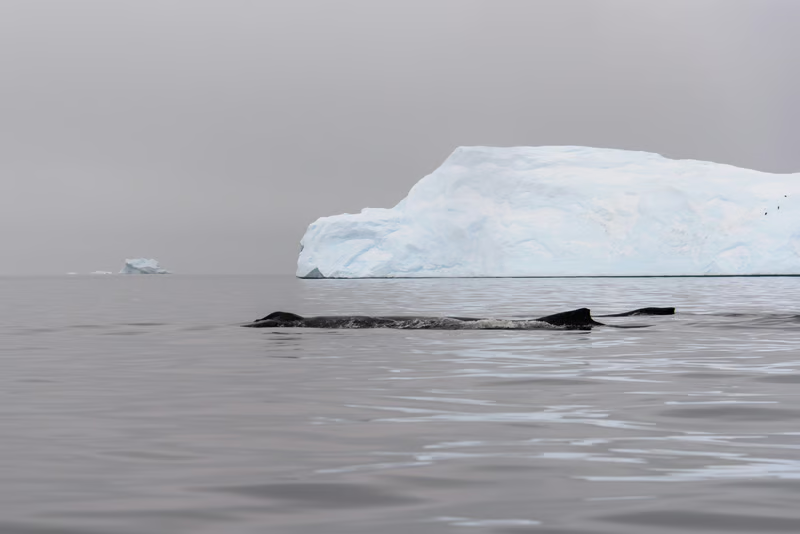
Late season (February through March): Whale activity generally increases, penguin chicks become more independent, and the changing light can be excellent for photography. Snow coverage may be reduced at frequently visited landing sites.
When I traveled in the late season, what struck me most was the scale of the ice and how different it looked from the ship, Zodiacs, and landing sites. The expedition team made every experience even more valuable with explanations that helped us understand the wildlife, geology, and changing conditions rather than simply photographing them.
Which Route Should You Choose?
Not every Antarctica trip offers the same scope of exploration.
“Travelers often choose the longest route because they fear missing out. Others choose the shortest to save time. Neither approach works well unless the itinerary matches the experience they want.”
One client came to us with their heart set on a particularly well-known expedition brand. But once we discussed what mattered most to them, I ended up recommending a different operator. And at the end of the client’s trip, their stories centered on how thrilled they were with the expedition team, the wildlife, the ship, and the overall journey.
It was the perfect example of one of my core planning principles: We don’t recommend the most popular option. We recommend the right one.
My preferred approach is to start with the traveler’s desired outcomes, then evaluate which route best supports them. Here’s what that could look like, depending on the part of Antarctica you’re traveling to:
| Feature | Antarctic Peninsula | Antarctic Circle | South Georgia and The Falklands |
| Typical duration | – 10 to 15 days, with 5 to 10 days spent in Antarctic waters | – Typically 10 to 16 days | – Typically 17 to 22 days (one of the longest cruise options) |
| Time distribution | – Balanced pacing
| – An extra 2-3 days of intense travel as you sail further south | – Extended sea voyage spanning multiple Antarctic regions |
| Wildlife | – Broad wildlife viewing opportunities, depending on the season and landing sites | – More regional species, including Adélie penguins and Weddell seals | – Massive king penguin colonies – Primary habitat of Atlantic fur seals |
| Highlights | – Steep, dramatic mountain scenery | – Remote southern scenery | – Deep immersion into the history of whaling and polar expeditions, as explored by the South Georgia Museum |
| Unique distinctions | – The itinerary I most often recommend for first-time visitors, because it introduces much of what makes Antarctica so extraordinary | – A meaningful milestone for travelers who want to reach farther south | – Frequently cited by returning travelers as one of the defining parts of their Antarctic journey |
Travelers can also choose to reach Antarctica by fly-cruise, an option ideal for those with limited time or serious concerns about the Drake Passage. The trade-off, however, is the higher cost, increased luggage restrictions, and weather-sensitive flight planning.
Remember: No expedition can guarantee that a planned landing, channel, or Circle crossing will be possible. Ice, weather, wildlife, and safety conditions will always shape the final route.
What are the Differences Between Ship Sizes and Expedition Capabilities?
When planning an Antarctica cruise, passenger count matters because the continent generally permits no more than 100 visitors from one vessel ashore at a site at one time. A ship carrying fewer than 100 guests may be able to land everyone together, while a 100 to 200-passenger vessel will normally require rotations. Vessels carrying 201 to 500 passengers face more restrictive landing operations, and vessels carrying more than 500 passengers cannot make landings.
Size alone, however, does not determine the experience. Other elements that affect how much time guests spend exploring include:
- Zodiac operations
- Vessels typically carry between 8 and 18 Zodiacs
- Guests are split into small groups for a 10 to 15-minute ride to shore
- A highlight of many Antarctic cruises
- Guides point out wildlife, share stories about the area, and answer questions
- For me, Zodiacs changed the scale of the experience. At the water level, the ice, wildlife, and ocean movement felt much more immediate. Wet landings also made the journey feel participatory. There was no cruise terminal to disembark at; we were stepping into shallow water and entering a landscape shaped entirely by nature.
- Expedition team strength
“A change in plans doesn’t necessarily mean a waste of time; with a strong expedition team, unexpected experiences can be the most rewarding”
- Strong operators build multidisciplinary expedition teams that may include naturalists, marine biologists, glaciologists, and field experts
- During my own Antarctica trip, I realized the guides weren’t simply explaining Antarctica; their enthusiasm and dedication were changing how I experienced it
- Landing efficiency
- Passengers on small ships can experience 2 or 3 landings per day; larger ships require more rotations
- Those not participating in landings may engage in activities including Zodiac cruising, onboard lectures, and wildlife observation
- Access
- Smaller vessels have access to a wider range of bays and channels, as weather and ice permit, such as the Lemaire Channel and the Graham Passage
- Closer viewings of wildlife, icebergs, and unique landing experiences
For most of my Antarctica expedition-focused clients, the real question is this: Do you value maximum immersion or greater onboard comfort more?
How Can You Create an Itinerary That Delivers What You’re Hoping to Experience?
One misconception I often see is that travelers feel they need to book every optional activity simply because Antarctica tours are a once-in-a-lifetime experience.
My advice is usually the opposite: Ask what an activity adds, what it replaces, how physically demanding it is, and whether participation is limited. Antarctica is not improved simply by booking more.
On a well-run cruise, travelers have several daily activity options at their disposal.
| Activity | Best for | Verify |
| Landings | – Walking ashore and wildlife | – Terrain, frequency, rotations |
| Zodiacs | – Water-level exploration | – Availability, time, capacity |
| Kayaking | – Quiet, active exploration | – Skill, cost, advance booking |
| Camping | – A rare night ashore | – Comfort, weather, facilities |
| Lectures and educational programs | – Deeper expert context and onboard research participation | – Topics, experts, inclusions |
From active immersion to intellectual depth, you decide what you want your days in Antarctica to look like.
Why Should You Compare Overall Value, Not Just Fare?
Antarctica fares can be difficult to compare because two similar-looking itineraries may include very different services and expedition experiences.
Consider a traveler comparing a base cruise fare of $9,000 with a similar itinerary priced at $12,000. At first, the $9,000 option appears to offer much better value. But once the traveler adds hotels, transfers, charter flights, equipment, gratuities, and optional activities, the price difference may narrow considerably or disappear altogether.
The $12,000 option may include many of these costs, along with stronger expedition staffing or more efficient off-ship operations. However, a higher fare does not automatically make it the better choice. The real question is what each voyage delivers for the total amount you will spend.
First, compare the financial inclusions.
Check whether the fare includes:
- Pre- and post-cruise hotel stays
- Charter or regional flights
- Airport and ship transfers
- Expedition parka and boot use
- Wi-Fi and beverages
- Gratuities
- Kayaking, camping, or other optional activities
- Travel protection or evacuation coverage requirements
Then, compare the expedition experience.
Some of the most valuable differences may not appear on a list of inclusions. Consider:
- Passenger count and landing rotations
- Zodiac capacity and embarkation efficiency
- Expedition team experience
- Guide-to-guest ratio
- Typical number of off-ship opportunities
- Itinerary length and number of sea days
- Ship design, ice capability, and stability
- Flexibility when the weather, ice, or wildlife changes the plan
When comparing Antarctica expeditions, I recommend asking three questions:
- What will my total trip cost be after all necessary additions?
- How much meaningful time will I have off the ship?
- Does the voyage deliver the wildlife, activities, comfort, and expertise that matter most to me?
The lowest fare is not always the lowest total cost, and the highest fare does not automatically deliver the best expedition. True value lies in how well the complete journey matches the experience you want.
Conclusion
An Antarctica expedition is shaped long before the ship reaches the first landing site.
My own expedition changed how I evaluate Antarctica for clients. Today, I look beyond photographs and luxury cabins. Instead, I focus on how ships operate, how much time travelers spend ashore, and whether every decision supports the experience they’re hoping to have.
If Antarctica is calling to you, don’t begin with the lowest fare or the itinerary everyone else seems to be booking. Start by deciding what kind of memories you want to bring home. From there, Travelopod can help you evaluate the season, route, ship, activities, and complete value of the expedition that best fits your priorities.
Frequently Asked Questions (FAQs)
1. How far in advance should I book an Antarctica expedition?
For the widest selection of vessels, routes, and seasons, I generally recommend planning 8 to 12 months in advance. Smaller ships, peak-season sailings, and specialty activities often fill up well in advance, so booking up to 16 months ahead can provide greater assurance and flexibility.
2. Are wildlife sightings guaranteed?
Nothing is guaranteed on an Antarctica expedition. Wildlife movements depend on factors such as weather, ice conditions, and food availability, and colonies are not always where we expect them to be. Choosing the right season improves your chances of seeing specific wildlife, but flexibility is part of every Antarctica expedition.
3. What happens if weather or ice conditions change suddenly?
The expedition leader will usually adjust the day’s itinerary by selecting another landing site, substituting a Zodiac cruise for a planned landing, or prioritizing onboard programs. Itinerary changes don’t necessarily mean a lost day; some of the most memorable experiences can come from the most unexpected moments.
4. How physically fit do I need to be?
Antarctica expeditions can accommodate a wide range of activity levels, but requirements vary by ship and activity. At a minimum, travelers should be comfortable boarding a Zodiac, walking on uneven terrain, and spending time outdoors in cold conditions, but there will be people around to help with some of these. Travelers with additional concerns should discuss accessibility and activity requirements with tour operators before booking.
5. Should the ship or itinerary come first?
Most travelers focus on the ship, but I typically encourage clients to start with the experience they want most: Season, route, and expedition style often have a greater influence on the journey than the ship itself. Once these decisions are made, it’s much easier to identify the vessel that best supports them.